Transitioning Off Birth Control After 40: What to Expect and How to Prepare
Jul 30, 2026Written by Sarah Bishop, MS Exercise Science, Functional Health Coach
A coach in our group mentorship brought us a case. Her client was 45, newly onboarded, and eager to come off hormonal birth control. She had been reading about hormone therapy online and wanted to know where she stood.
That question isn’t addressed enough. And it’s one we get constantly, from clients and from the coaches we mentor, and the answer absolutely depends on the woman in front of us.
Coming off the pill at 25 and coming off the pill at 45 are two different conversations. At 25 we are supporting a body that will most likely resume ovulatory cycles. At 45 we are supporting a body that may already be years into perimenopause, where those cycles may not come back at all. Both deserve preparation and a plan for what happens if the hormones never return and how to support her body knowing that she hasn’t been exposed to those hormones endogenously for perhaps a decade or more on the pill.
But before we talk about how to come off, we have to talk about what you are coming off of .
How Hormonal Birth Control Works: The TLDR
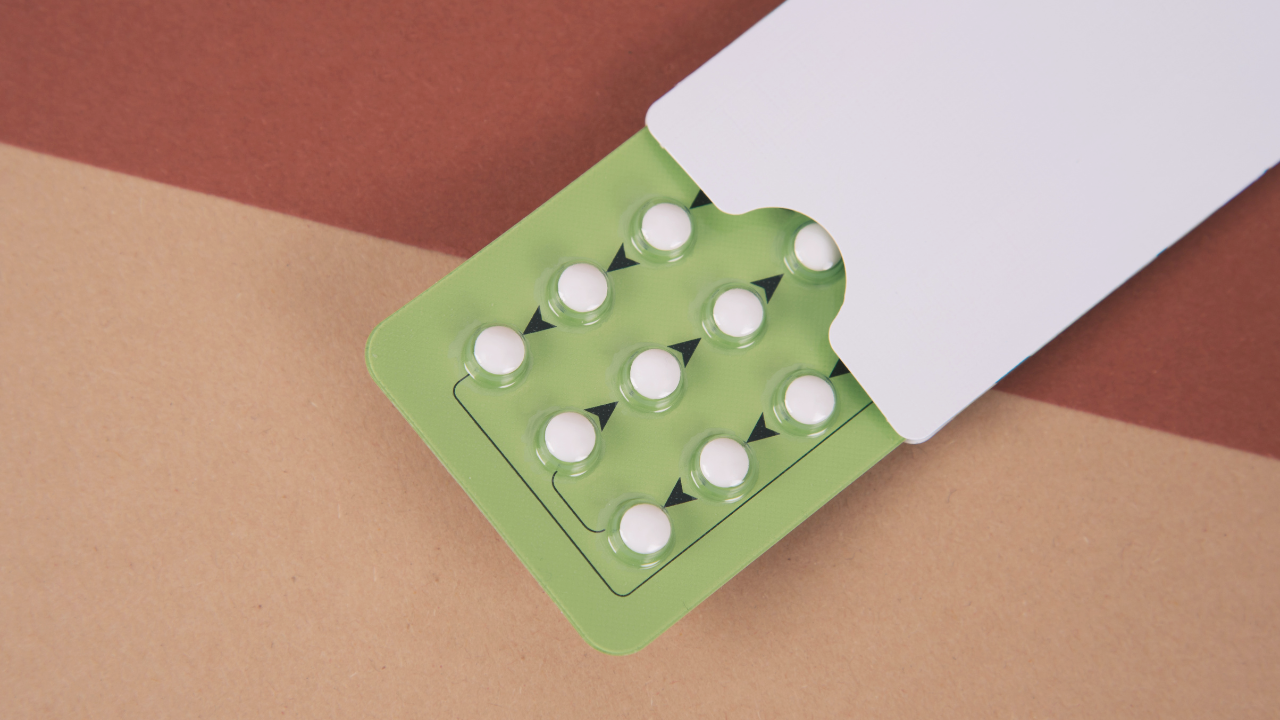
Ovulation is how women make most of their reproductive hormones, progesterone and estrogens, in her reproductive years. In order to prevent pregnancy, the oral contraceptive pill shuts off a feedback loop between the brain and ovaries, known as the hypothalamic-pituitary-ovarian (HPO) axis, preventing the release of an egg from the ovary and stopping ovulation.
Oral Contraceptives Mechanism of action:
-
Stops ovulation by preventing the release of an egg from the ovary.
-
Thins the lining of your uterus, which makes any implantation of the egg more difficult.
-
Thickens mucus in the cervix, which makes it harder for the sperm to reach the egg.
No ovulation means no babies, and it means little to no production of progesterone and estrogen, and sometimes suppression of testosterone as well. These hormones play a key role in cardiovascular health, metabolism, bone health, lipid metabolism, sleep, mood, every aspect of a female's health.
Do You Ovulate on a Hormonal IUD? Mirena, Kyleena, and Skyla
Hormonal IUDs work differently from the pill. They release progestin locally in the uterus, which thickens cervical mucus and thins the endometrial lining. Because the dose is local and low, they do not reliably shut down ovulation the way an oral contraceptive does. Two things matter here for the woman in her 40s. First, some women on an IUD are still making their own hormones and some are not, and you cannot tell which from bleeding pattern alone. Light or absent periods on an IUD are an endometrial effect, so they are not proof that she has stopped ovulating. Second, this is exactly why "when was the IUD placed" belongs on the timeline we build below.
Why I Don't Demonize Birth Control
Now, before I go on: while hormonal suppression is a side effect of oral contraceptive pills (OCPs) , and while that suppression can have global health impacts, so can having a baby a female isn't prepared to have or wants to have. Endometriosis, PMDD, and PMOS are all some other reasons where a female may opt to go on an OCP, all conditions that significantly impact quality of life and where suppression of hormones via an OCP may be a conversation she has with her health care team.
It's a conversation we hope has nuance around it and is revisited often, as health considerations and needs change as she does. But I say all this to say I do not demonize contraceptives like I know many in the functional health space do. Birth control has had a significant impact on women's health and lives, and we can't talk about stopping it without talking about those nuances.
Coming Off Birth Control in Perimenopause Is a Different Conversation
Just as there are a variety of reasons for starting birth control, there's a variety of reasons for stopping. Whatever her reason for transitioning off birth control, it's essential to support the HPO axis to aid in the goal of regaining ovulatory menstrual cycles, and getting the benefit of that endogenous hormone production.
Hold up, hold up, hold up. Restoring hormones… what if a female is in her 40s? 50s?
As you probably know, as women age, particularly in their 40s, they may be in perimenopause. 50s, nearing or in menopause. This means that the body's natural hormonal cycles might already be changing, to more and more anovulatory cycles. In a female not on hormonal birth control (HBC) we could monitor this and get a gauge for where she is at in that up to 12 year transition to ovarian senescence. On HBC? Not so much. It's possible she's further along in that transition and those hormones don't come back online. For someone making the decision to stop HBC (and any coach who supports her) and bolster not just hormonal health, but systemic health , we need to factor this in.
When the future is uncertain, it's well, confusing and daunting. Which, unfortunately, aren't new adverbs to describe women's health. Social media doesn't help this either. Ultimately, health and health goals are so unique because every woman's story, body, and health and fitness goals are.
I am not going to write about an exact 5 step protocol to support coming off birth control in your 40s, because I can't. But I can talk about steps to take and conversations to start having with yourself, your client, and your doctors and anyone else on the team.
Step 1: Build a Timeline of Health and Birth Control History
First, it's crucial to establish what your body is doing right now to prepare for what might happen next. For me that always starts with a timeline, and gathering context:
- When did she go on birth control?
- Why did she go on birth control? (Was it for birth control? To manage symptoms? To "fix" acne or amenorrhea? "Fix" is in air quotes for a reason: stopping a cycle isn't the same as addressing the root cause behind symptoms.)
- What type of birth control(s) is she taking, or has she taken?
- Does she have children?
- Does she want to have children?
- What other significant health diagnoses or events have occurred in her life?
- Is she bleeding, or if on a hormonal IUD, ovulating ?
I want to know her menstrual history, health history, training phases, diet patterns, pill history, symptoms, stressors, all of it.
A timeline lets me see:
- Total allostatic load
- What patterns are repeating
- Where she'll need support
- When to collaborate with a provider
And one last note here "hormones" are not the cause of all symptoms some one may be experiencing. Let's take brain fog for example. Yup, low estrogen absolutely can cause that. AND so can something like iron deficiency , dehydration or skipping lunch on the regular. A through and honest inventory is so important to not miss some of those nutrition and lifestyle factors that aren't glamorous but absolutely pack a punch.
Step 2: Prepare for What Happens After You Stop the Pill
Next, I want to talk to her about her reason for coming off the birth control. I want to prepare her then for what may happen next.
A Potential for Ovulation (and Pregnancy !)
When you stop hormonal birth control, there's a possibility of resuming ovulatory cycles. Depending on your age and health, this could lead to pregnancy. I've seen it happen! Which could be a blessing for some women and a goal, and for other women it's a HARD no. We need to prep for that and have a back up option in place.
Prepare for no ovulation as well. Again factoring in age and history here, that communication between brain and ovaries may not come back online. In which case I want her to be equipped with knowledge of the possible benefits of hormone therapy to protect her health long term.
Side Effects
Be prepared for potential rebound effects, such as acne, weight gain, hair shedding, mood shifts, or changes to sleep as hormones come back online, especially if you experienced these issues prior to starting birth control.
Monitoring Your Health Before, During, and After
We need to be on the lookout for negative shifts in biofeedback and be on top of regular blood work and appointments to ensure systemic health (remember what I was saying about the benefits of those hormones?) is supported before, during, and after transitioning off birth control.
Step 3: Assemble the Support Team
Before making the transition off birth control, it's beneficial to assemble and let a support team know what you're doing. This includes:
- Health coaches who can guide your nutritional and lifestyle change
- Prescribing doctors who can assist in monitoring hormonal levels and overall health
Step 4: Support Your Body So the HPO Axis Can Come Back Online
Then we are looking at supporting your body, or as I like to say, "putting the boxing gloves on," so that that HPO axis has the best shot at coming back online. That looks like an assessment of:
- Sleep and circadian rhythm
- Blood sugar regulation
- Nutrition
- Exercise
- Gut health
- Liver and detox support
- Thyroid health
- Stress and mindfulness
- Supplements
Not only do these items give the HPO love, but they are areas that are key for all aspects of health and performance.
PS We did a whole Birth Control Masterclass on these steps you can check out HERE
Step 5: : Get Baseline Lab Work Before Coming Off the Pill
As far as lab work goes, we do want to get a good baseline and consider how hormonal suppression can influence other systems, as well as nutrients depleted by the pill. For me this includes a check on:
- CBC
- CMP
- Insulin
- A1c
- hs-CRP
- Iron panel (Iron, TIBC, Ferritin )
- Vitamin D
- Full thyroid panel : TSH, Free and Total T3 and T4, Reverse T3, Thyroid Antibodies
- Estrogens (again, no ovulation doesn't mean no production)
- Free and total testosterone
- RBC magnesium
- B12 and folate
- DHEA-S
- Cortisol
And any other markers or panels that her health history indicated a need for before coming off the pill, as there are many factors at play beyond HBC that can influence systemic health.
Again, the overarching goal is to support systemic health for a smooth transition and possibly supporting the return of ovulation. Which is all about making the body feel safe. A glaring micronutrient deficiency like a tanked vitamin D, or dysregulated blood sugar and high insulin, may be a cause to pump the brakes and work on some nutrition and lifestyle things before coming off the pill.
How long to work on that? Now again, this convo is highly individual.
3 Real Client Cases: What Coming Off Birth Control Actually Looks Like
Case 1: A Faster Timeline
For a female eager to come off the pill, who doesn't want to get pregnant and has concerns about her bone health, we may be looking at a faster timeline.
This was the case for one of my clients whose flags in her lab work (nutrient deficiencies, low testosterone, high iron, dysregulated lipids and liver enzymes) were stemming from the pill. For her, hair shedding was a concern in her past, so we layered in supplements based on labs (for her this was beef liver and cod liver oil to support deficiencies on the pill and not overload her body [ LEARN MORE HERE ABOUT IRON].
We honed in on diet and lifestyle for 2 months before stopping the pill. After about 4 months, we ran blood work again: definite improvement in her nutrient markers, and liver enzymes were down. However, she still wasn't ovulating. At her age (49) and considering her goals and health history, I facilitated a referral to a provider who could support her with hormone therapy to protect her bones and cardiovascular health.
Case 2: Pumping the Brakes for Gut Health
Another example where we decided to pump the brakes on a goal of coming off the pill is when a client of mine who had ulcerative colitis wanted to stop the pill. Now, this was someone who was 40, was on the pill for almost 2 decades, and had goals of pregnancy in the future. At the time, she was also dealing with intense GI symptoms, inflammation, and constipation.
For her, we had a conversation around a timeline first focused on supporting her gut health to better prepare her body to be in a good spot to come off the pill. We started with baseline labs and a GI map and spent about 6 months prepping her body which included supporting her ability to breakdown and absorb nutrients, filling in nutrient gaps that the colitis and birth control contributed to and supporting her immune system. This was actually a case where she stopped the pill and about 2 months later had her first bleed and ovulatory cycles immediately.
I say "this was actually a case" because sometimes you can do all the right things and either the transition is rocky or ovulation does not come back online. It's truly case specific and not something within your control. Meaning, You are NOT a failure if you don't start cycling again naturally.
Case 3: Diet and Lifestyle All Over the Place
Finally, we have examples where diet and lifestyle are absolutely all over the place. Sleep is a wreck. Stress is sky high.
This was the case for one of the coaches in our group mentorship onboarding a new client in her early 40s. She was eager to come off the pill and seeing a lot of messages online about the benefits of hormone therapy. To which, we love to hear that she is looking for information about how to support her health for the long game! And we want her to be prepared. And that was the conversation we encouraged this coach to have with her new client.
While the decision to start or stop a medication is always up to a client and her provider, our advice here would be to talk to the client about how dialing in on her nutrition and lifestyle for a few months can put her in a better spot for a smooth transition off the pill (though again, no guarantees) and to make any hormone replacement therapy more beneficial as well (RESOURCE HERE IF YOU WANT TO LEARN MORE ABOUT IMPROVING YOUR HRT EXPERIENCE).
The coach put together a timeline for her client, and now they are at work on those nutritional changes, layering in appropriate supplements, got some baseline labs in, and in 4 months are going to come off the pill and start that timeline of follow-up care.
Again, this isn't about withholding a change or a goal. It's about preparing for it.
What to Track After Stopping Hormonal Birth Control
After coming off hormonal birth control, we want to start tracking symptoms. We want to keep track of any shifts or indications of ovulation, such as:
- Cervical mucus changes
- Basal body temperature
- Any cyclical shifts in digestion, sleep, mood, energy, headaches, etc.
- Vaginal dryness, discomfort with sex, or urinary symptoms (these are often symptoms of low estrogen)
These could give us clues of what your endogenous production of hormones is doing or trying to do. We often suggest waiting ~12 weeks after stopping OCPs before getting lab work done again to give endogenous hormone production a chance to come online again, however that timeline can be shortened and/or extended depending on goals and any red flags in symptoms such as hot flashes, night sweats or heavy bleeding.
This conversation has nuance. And it is confusing, because there are a lot of things to consider, as the body is very much a game of chess, not checkers, with many moving parts. That said, we want every woman to know her options and to understand what is happening in her body as she ages, so she can use that information going forward. And we want coaches to know they can guide this conversation, and not be left at the mercy of an Instagram reel spewing all or nothing recommendations on a topic that has a lot of grey.
[Contact us here] for a consult on your case or your client's.