Happy Sunday,
Sarah here, and Florida hit 57 degrees this morning when I'm writing this!
knew it was officially Fall in Florida last weekend when my husband and I went to the USF football game (Go Bulls!) and dipped out in the third quarter because of the wind chill. We showed up in tank tops, a very Floridian mistake, but we looked cute and USF won so I stand by it. Before the weather gave me permission, I’ve been making soup.
Never have I ever heard of a gut healing salad. But soup? Soup packs the healing punch (recipe below). If you have gut health goals, soup season > salad season.
Salads bigger than your head and a pile of raw veggies at every meal ask a lot of a digestive system, especially one that’s already struggling. I love vegetables. I love cooked ones the most though when digestion is the goal, and a pot of soup is the easiest way I know to eat a lot of them without the bloat.
There are 5 things I want to work on with anyone who comes to me for digestive health:
-
Improving digestive capacity
-
Eating more minerals without it taxing the gut
-
Improving motility
-
Thyroid-gut-liver axis
-
Relationship with food and their body
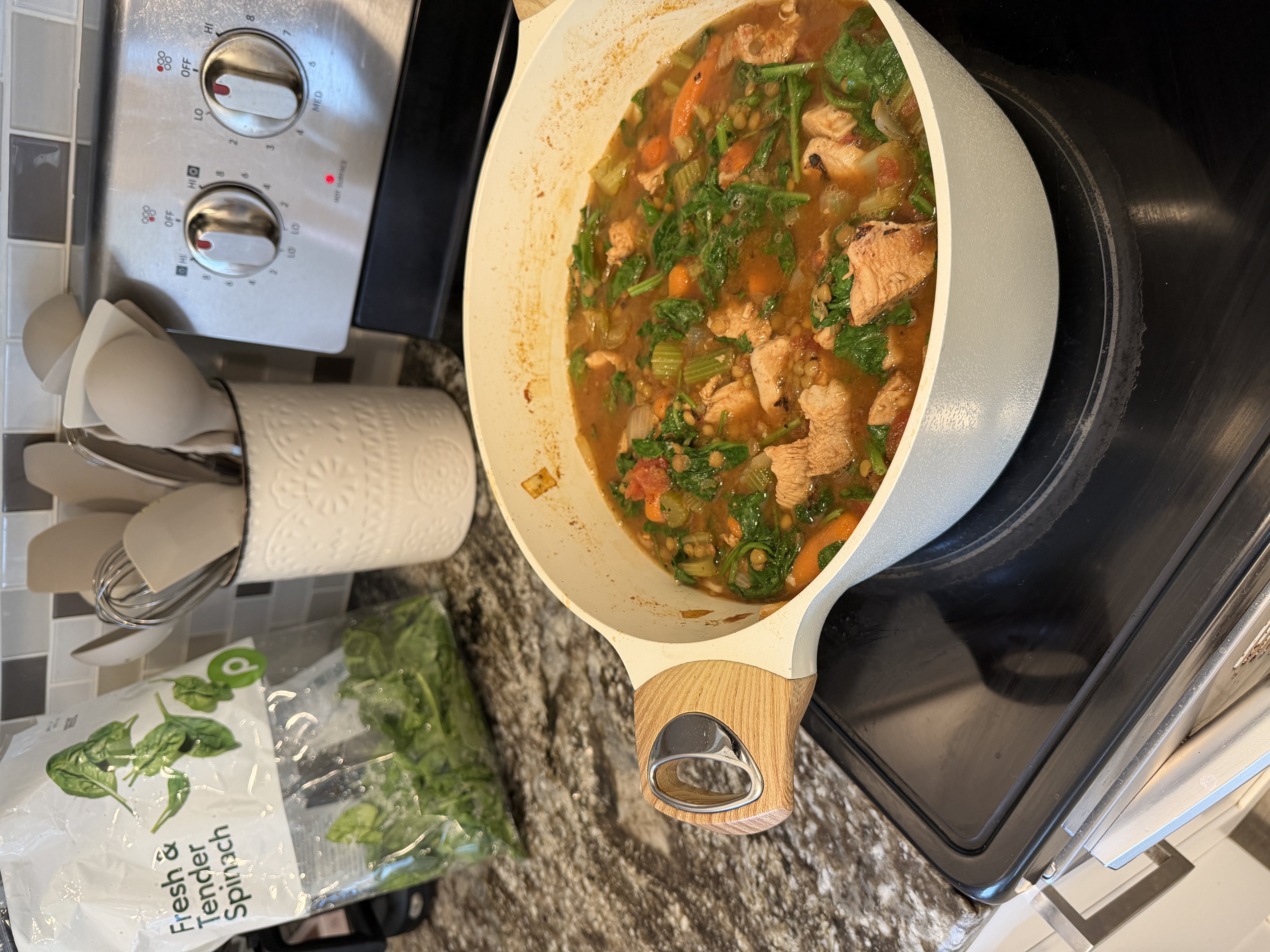
Here’s what was going on in this recipe :
📌 Carrots and spinach for potassium. Potassium plays a role in thyroid health, blood sugar regulation and digestion, and most women I work with fall well short of the 3500 mg target. Spinach wilts down to almost nothing, so you get a lot of nutrients without it bloating you.
📌 Lentils for fiber and carbs. They add slow-digesting carbohydrate along with the fiber, plus more potassium. If your fiber has been mostly raw veggies, cooked lentils are a softer way to get it in.
📌 Bone broth and chicken breast for protein that’s easy to digest. Both are gentle on a gut that’s low on stomach acid (key for protein breakdown!), and salted broth brings the sodium and chloride your body uses to make that acid.
📌 Turmeric, garlic, onion and ginger are anti-inflammatory and support that gut-liver axis. Ginger is one of my favorite digestion tools, especially if we’re working on motility. Garlic and onion can be triggers for some women at first, so you may need to play with quantities.
I add a squeeze of lemon or kraut to my bowl for a little more gut health love. I didn’t track this soup, so there are no macros. I’ll usually encourage some untracked meals this season. Learning how to eat for your gut health and blending that with your knowledge of macros is one of the best ways to build a stronger relationship with your body. Plus, less data, even when it’s “easy” to track, often does a stressed belly good.
Recipe
Recipe adapted from Hummusapien and this chicken lentil soup from The Almond Eater (pictured above). I have made a few versions of this, think of this one below as a starting point and let your fridge decide the rest!
-
1 large yellow onion, diced
-
4 medium carrots, peeled and diced
- 2 celery Ribs
-
4 garlic cloves
-
~2 tbsp fresh ginger
-
2 large chicken breasts with rib meat (just under 2 lbs)
-
1.5 cups lentils, rinsed
-
6 cups liquid (I use water + 4 cups chicken bone broth)
-
Salt, pepper, turmeric, paprika and cumin to taste
- Fresh
-
~6 ounces fresh spinach, wilted in at the end
Sauté the onion, carrots, garlic and ginger in a big pot with your salt, pepper, turmeric and cumin. Add the lentils, broth, water and whole chicken breasts. Bring to a boil, then simmer. After about 20 minutes, pull the chicken out, shred it and put it back in. Let the lentils keep cooking until tender. Stir in the spinach at the end and let it wilt.
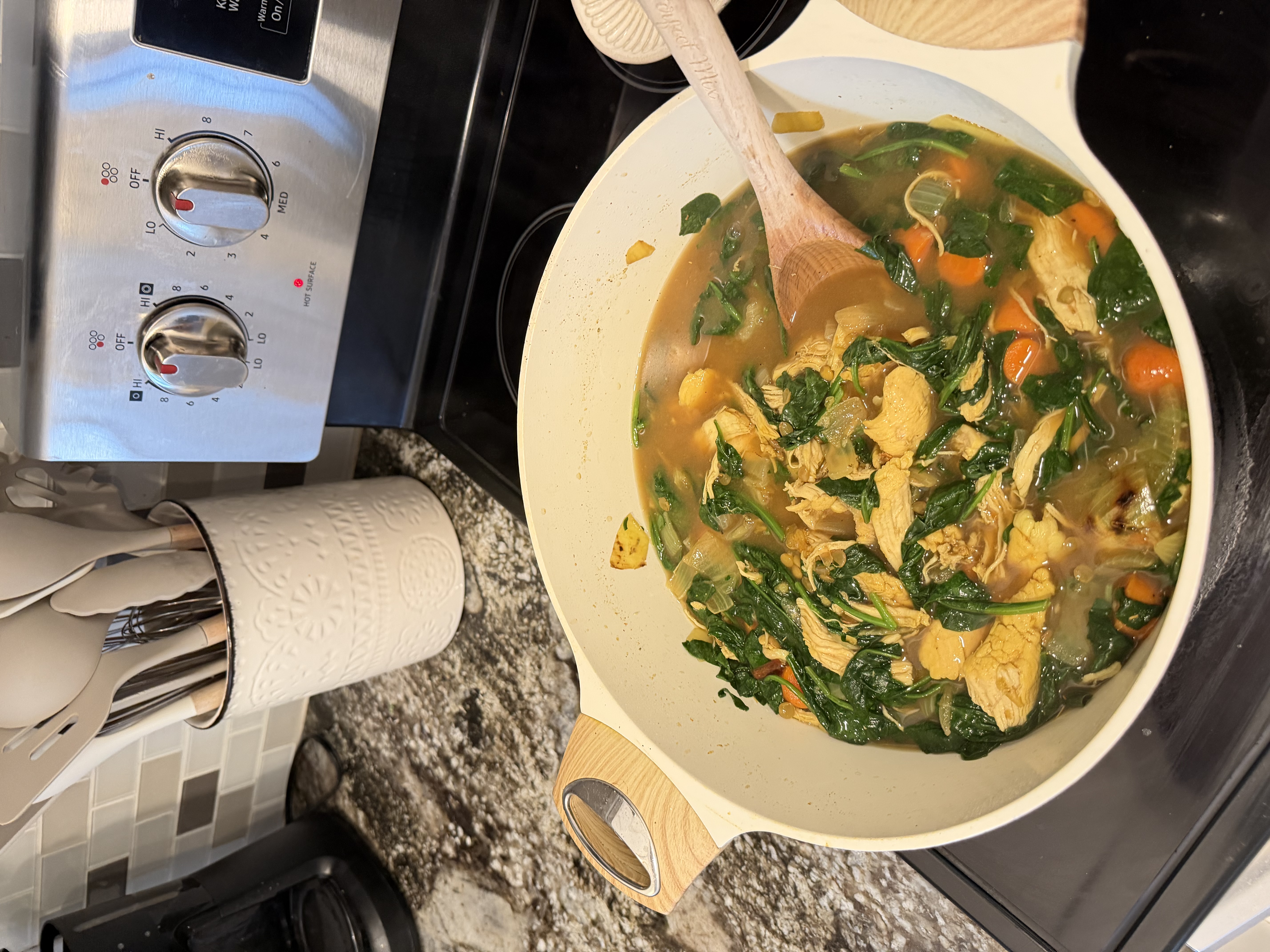
It makes great leftovers too, because the lentils soften more and the soup thickens up.
The soup is half of it. How you eat it is the other half.
When someone comes to me with bloating, reflux, constipation, or even acne, PMS and fatigue, the urge is usually to grab a new supplement, cut out a bunch of foods or book an expensive stool test.
Those all have a place in my work. They are just never where I start. I start with what I call the prerequisites, the low hanging fruit that changes how you feel and tells us whether more testing is even needed. And if they’re not in place, whatever you’re dealing with tends to come back.
A lot of it comes down to meal hygiene, and no, I don’t mean napkin on your lap. I mean the state your body is in when the food arrives.
Digestion runs best when your parasympathetic nervous system is in charge. That means a few deep breaths before you eat, chewing well, spacing your meals out and cooking your veggies. I put all of this into a guide, Prerequisites Before Starting a Gut Protocol, and you can download it here.
If you make the soup, hit reply and let me know how it goes. I read every one!
Have an amazing week,
Sarah & Mere


Responses